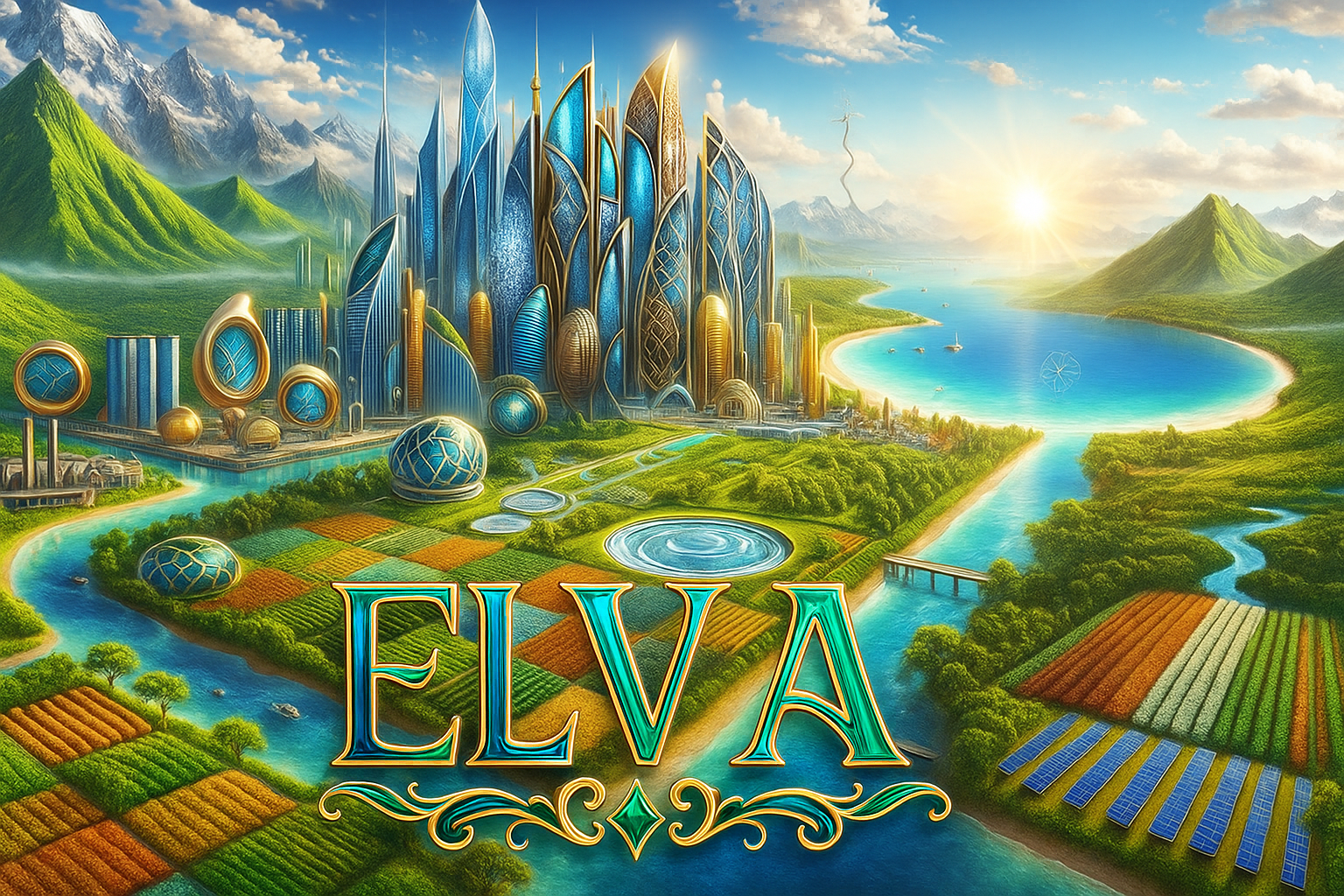

A profound transformation is no longer theoretical—it is actively emerging at the deepest structural layers of the global economy, signaling not an evolution, but a civilizational inflection point. What stands before us is the quiet collapse of a centuries-old paradigm, and the simultaneous birth of something far more powerful: an economy not built on depletion, but on regeneration; not driven by scarcity, but by intelligent abundance.
For over a hundred years, industrial progress has followed a singular trajectory—extract, consume, discard. Fossil carbon was unearthed and burned to power nations. Minerals were removed from the Earth to construct cities, machines, and networks. Ecosystems were treated as externalities, sacrificed in the name of growth. This model, while extraordinarily productive, was fundamentally linear, inherently finite, and ultimately self-limiting.
Today, its constraints are no longer abstract. They are visible in destabilized climates, degraded soils, strained supply chains, and the growing realization that exponential demand cannot be sustained by finite extraction.
And yet, at the very moment these limits become undeniable, a radically different architecture is taking shape.
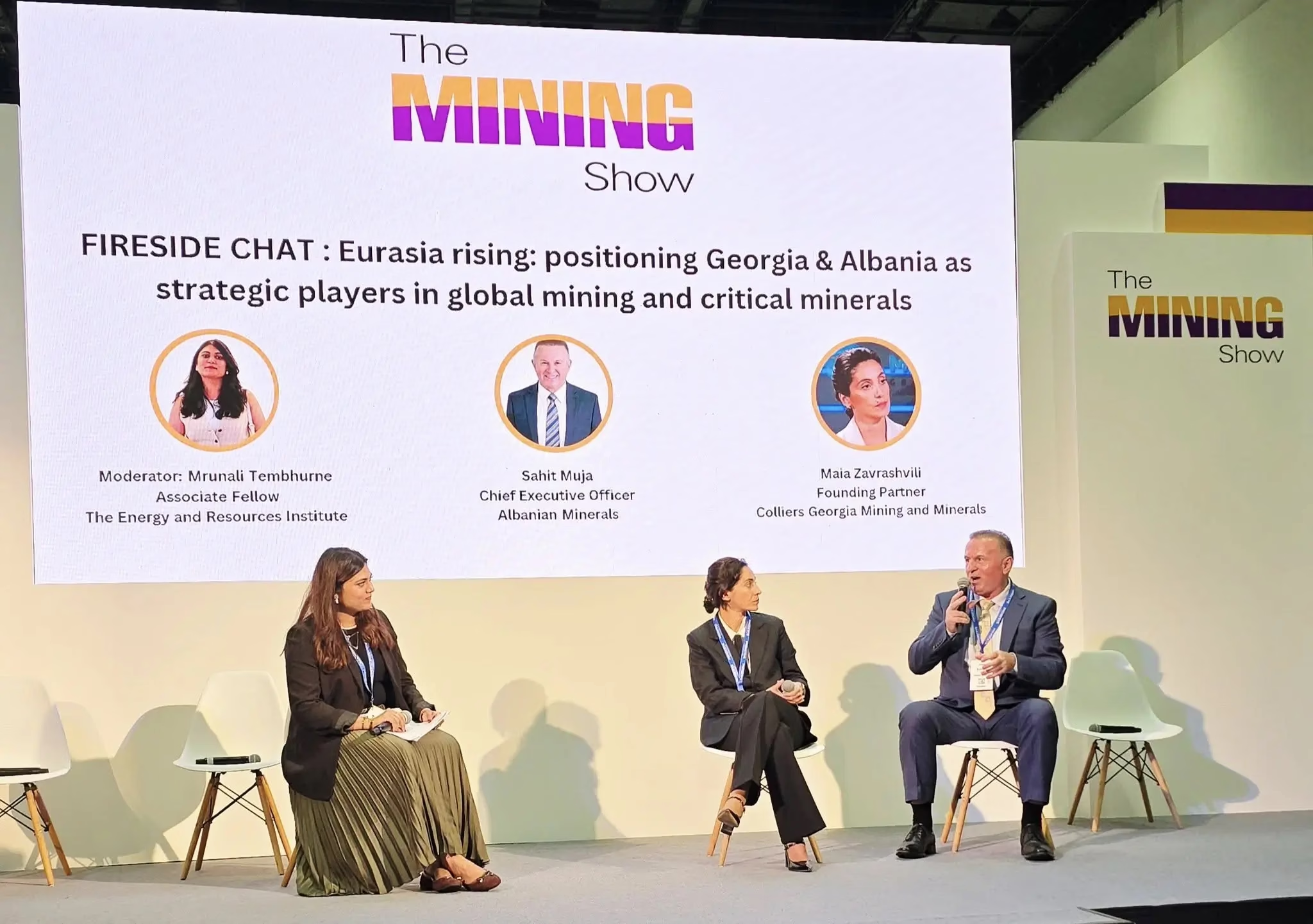
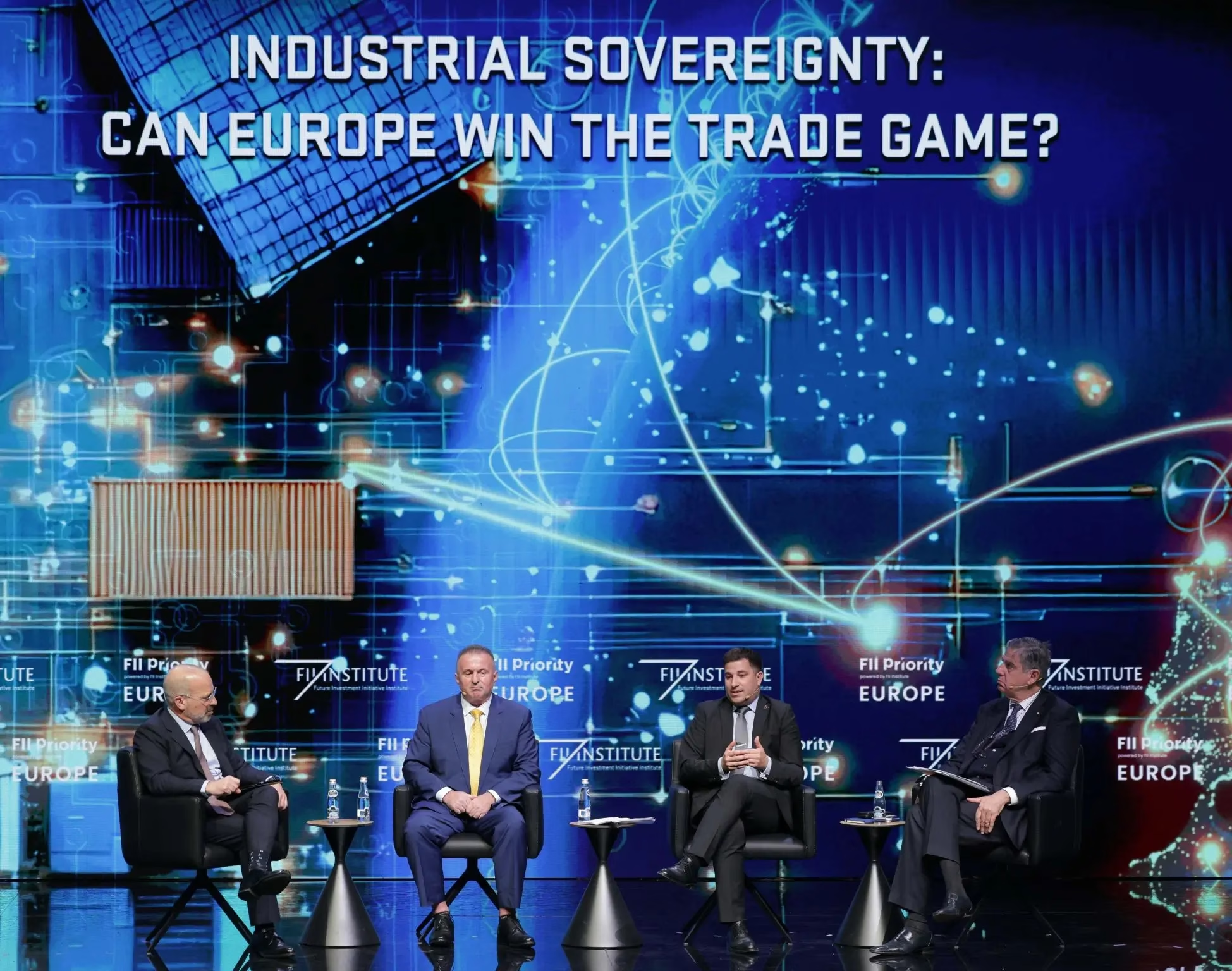
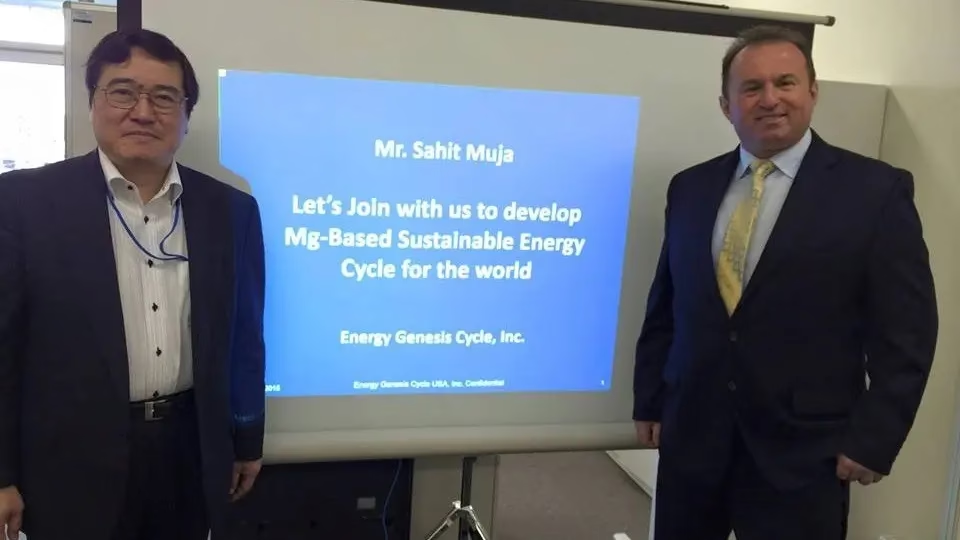
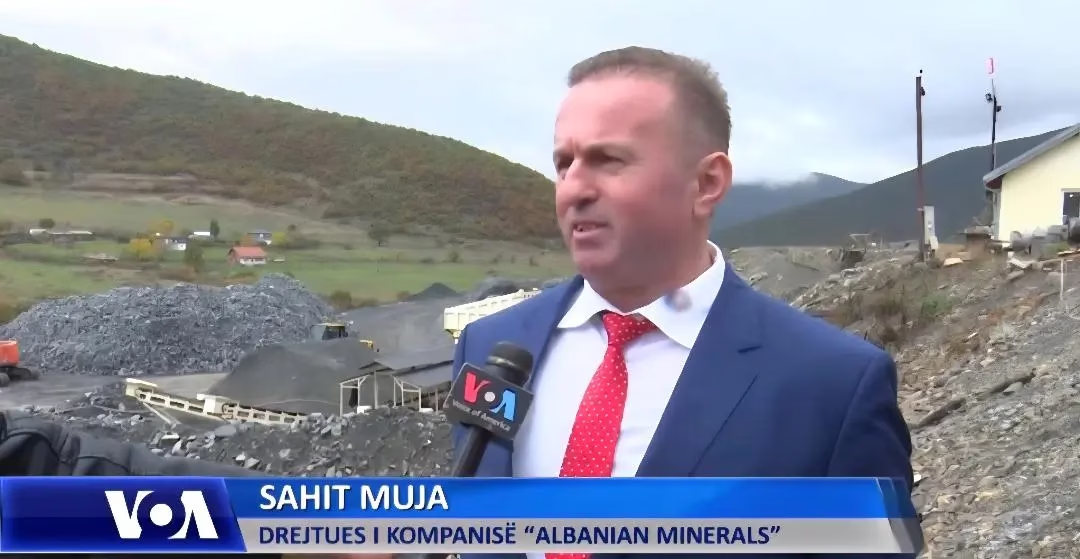
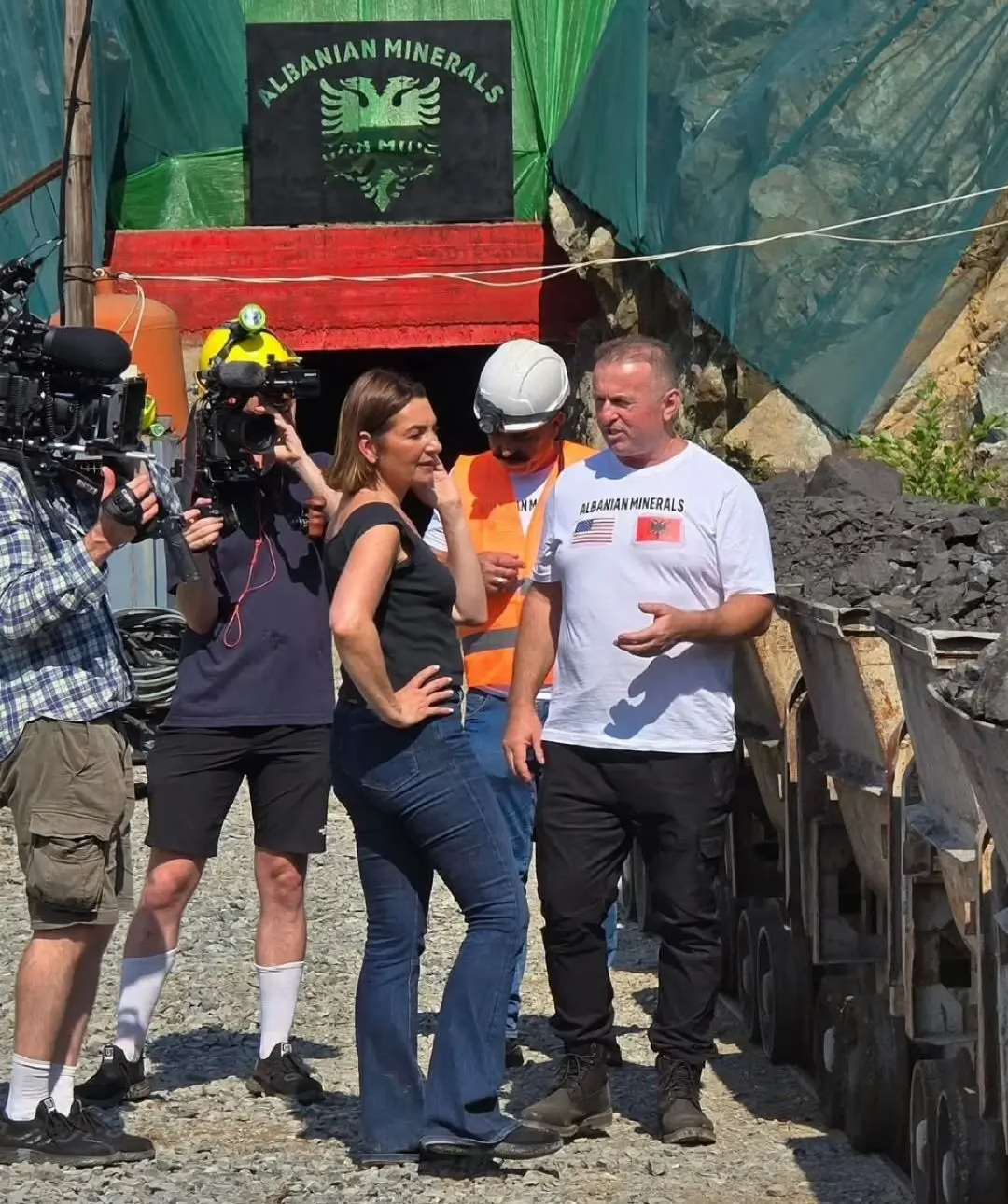
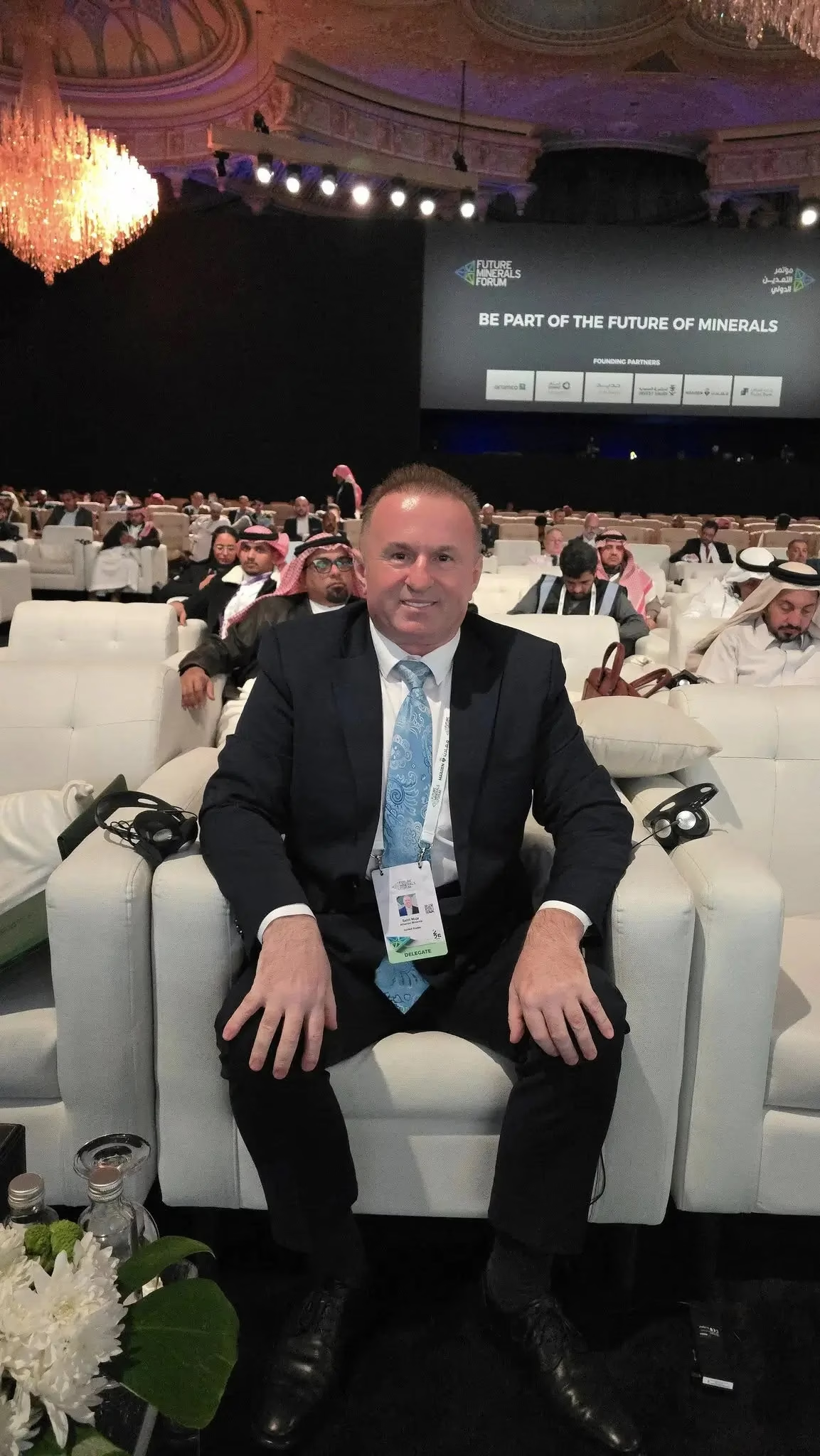
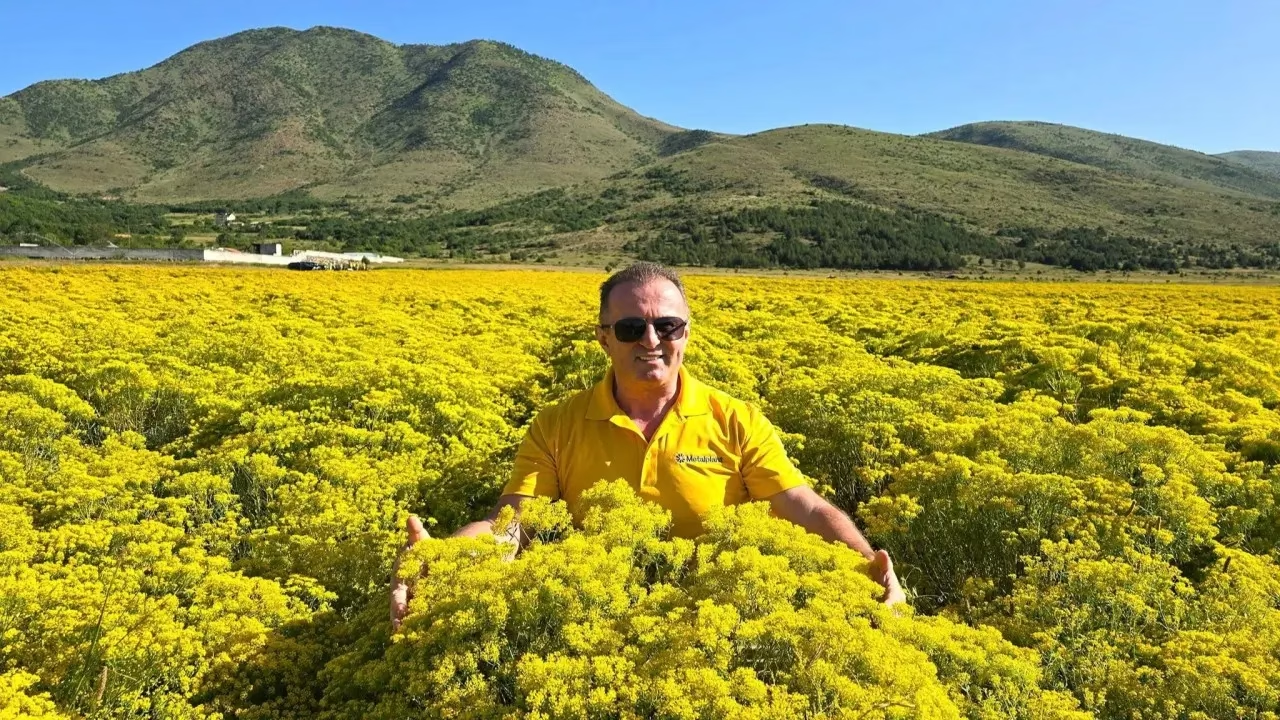
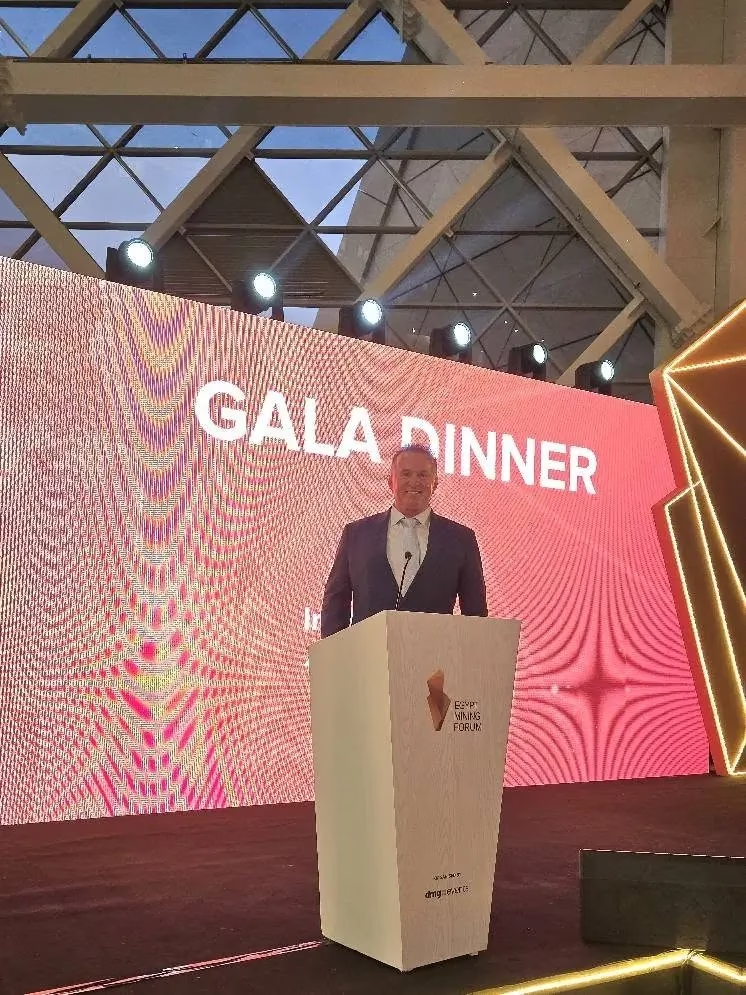
At the center of this new paradigm stands Sahit Muja, the architect of a $30 trillion regenerative economic system that challenges the foundational assumptions of modern industry. His vision does not attempt to optimize the old model—it replaces it entirely.
This is not an energy transition. It is a production revolution.
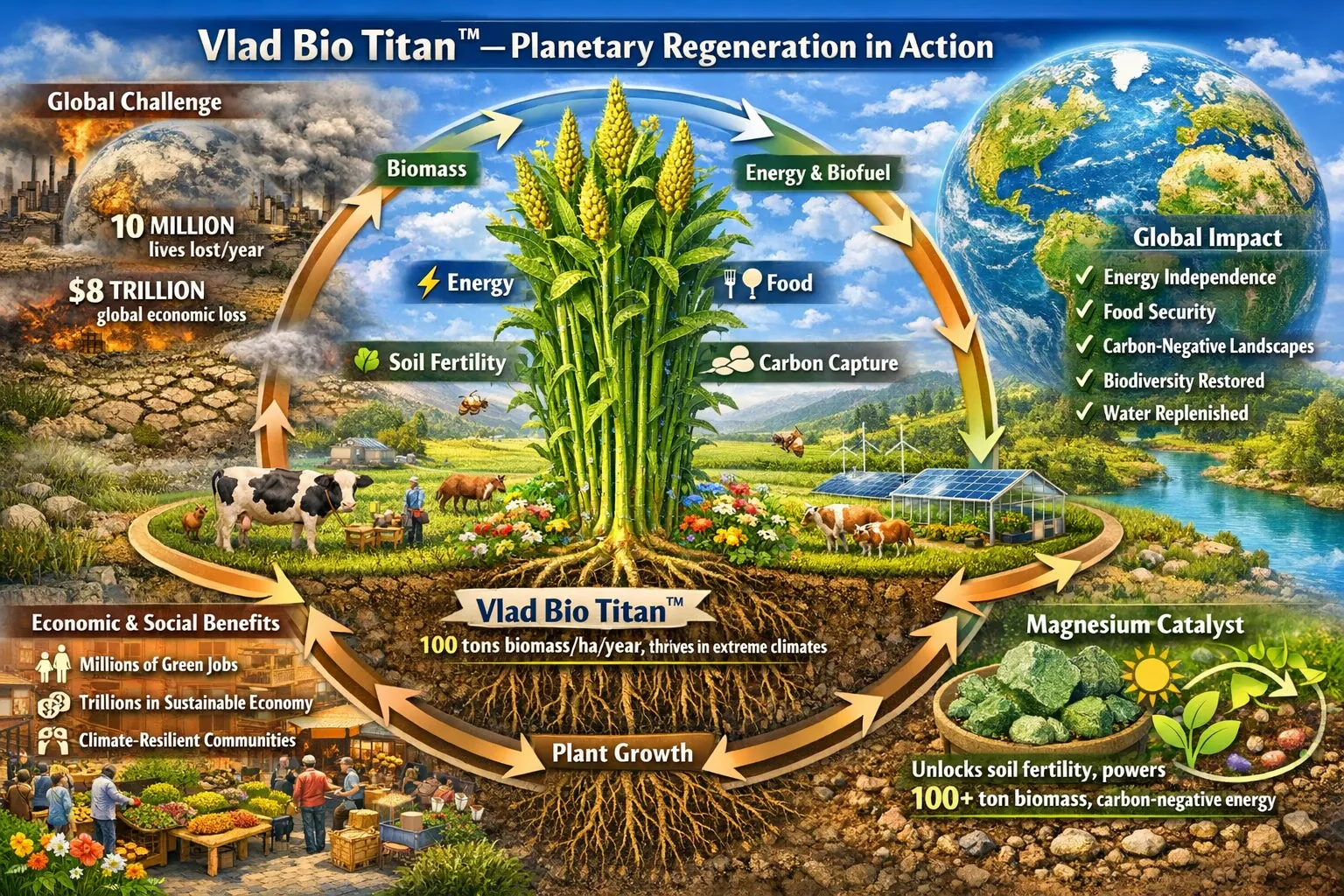
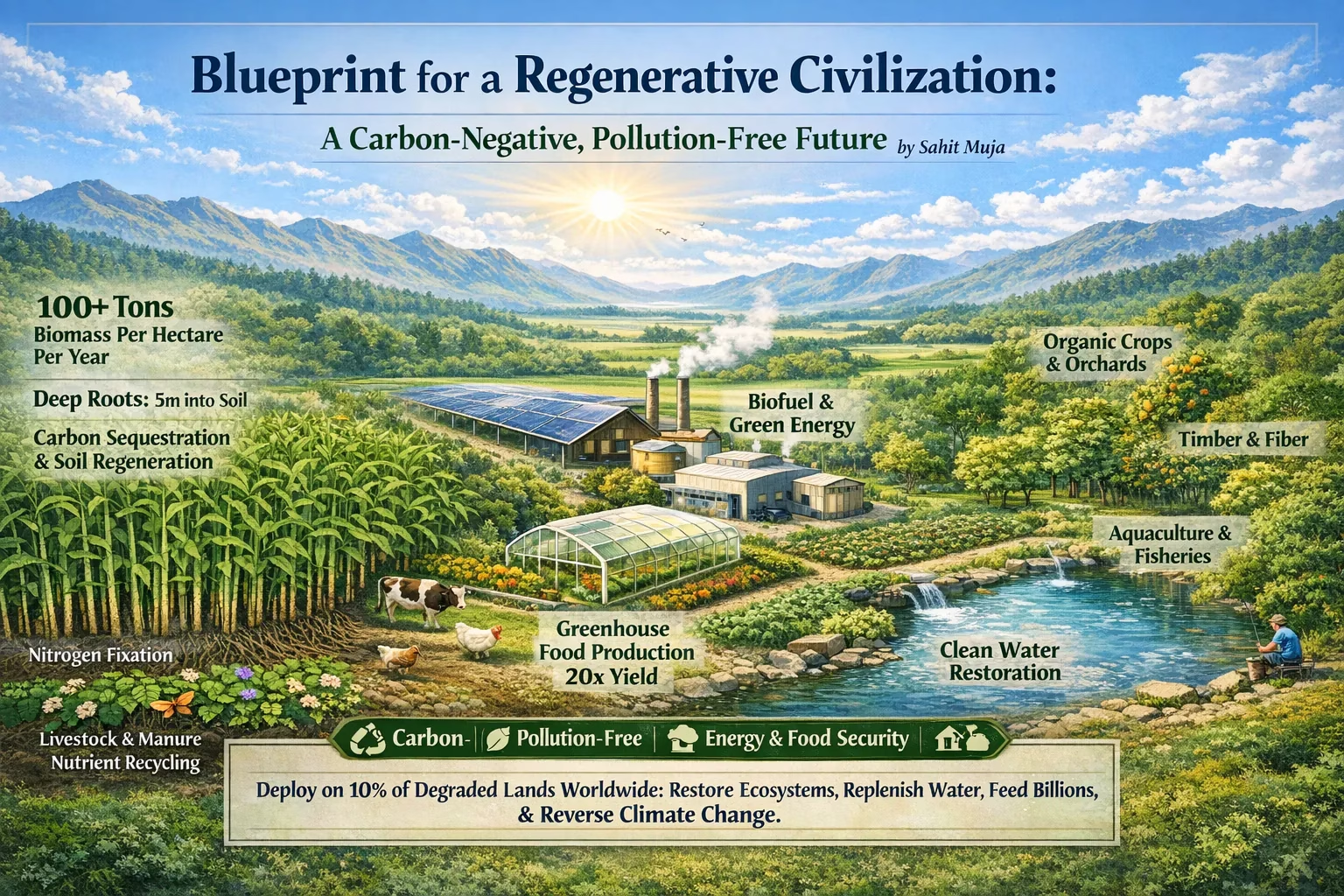
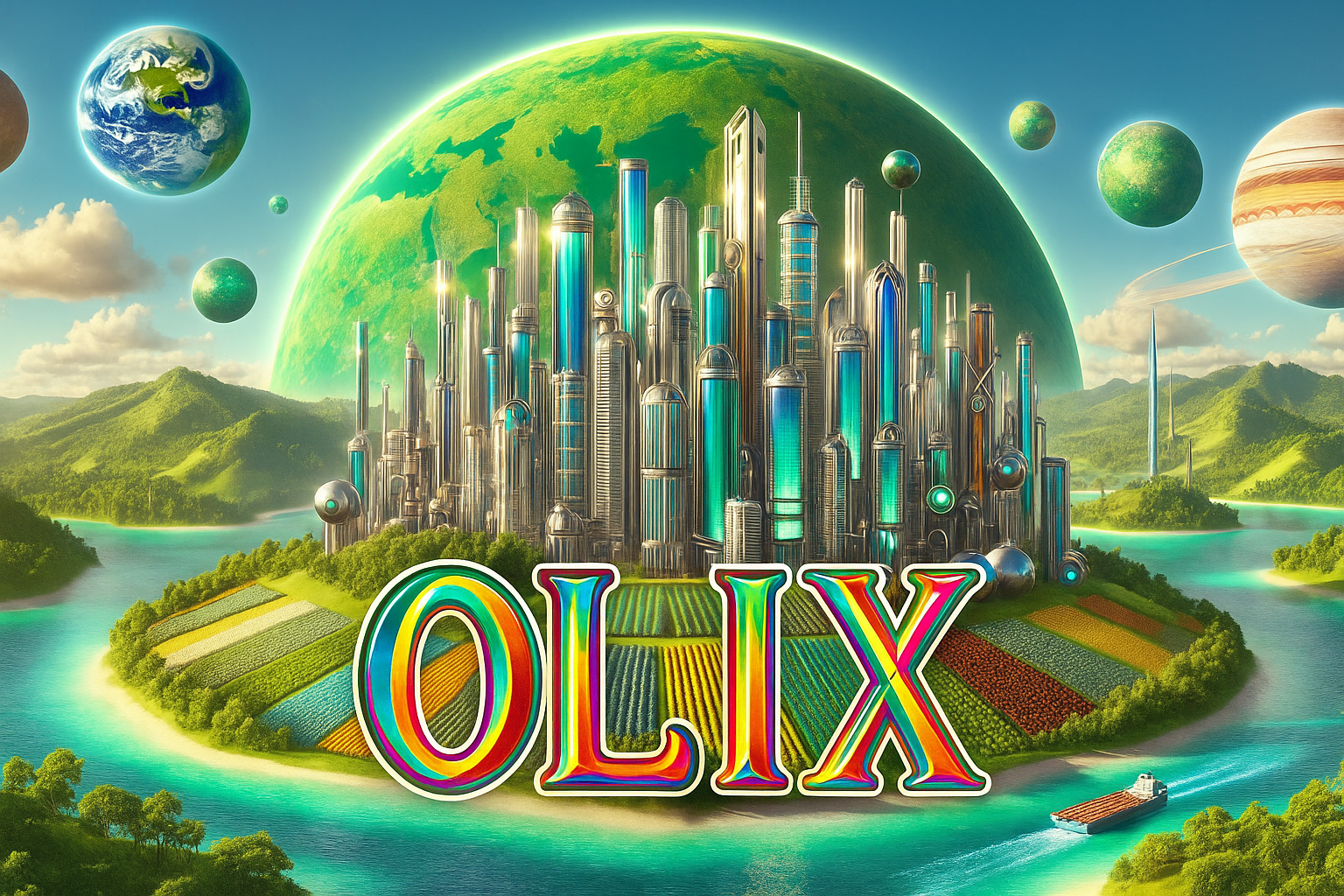
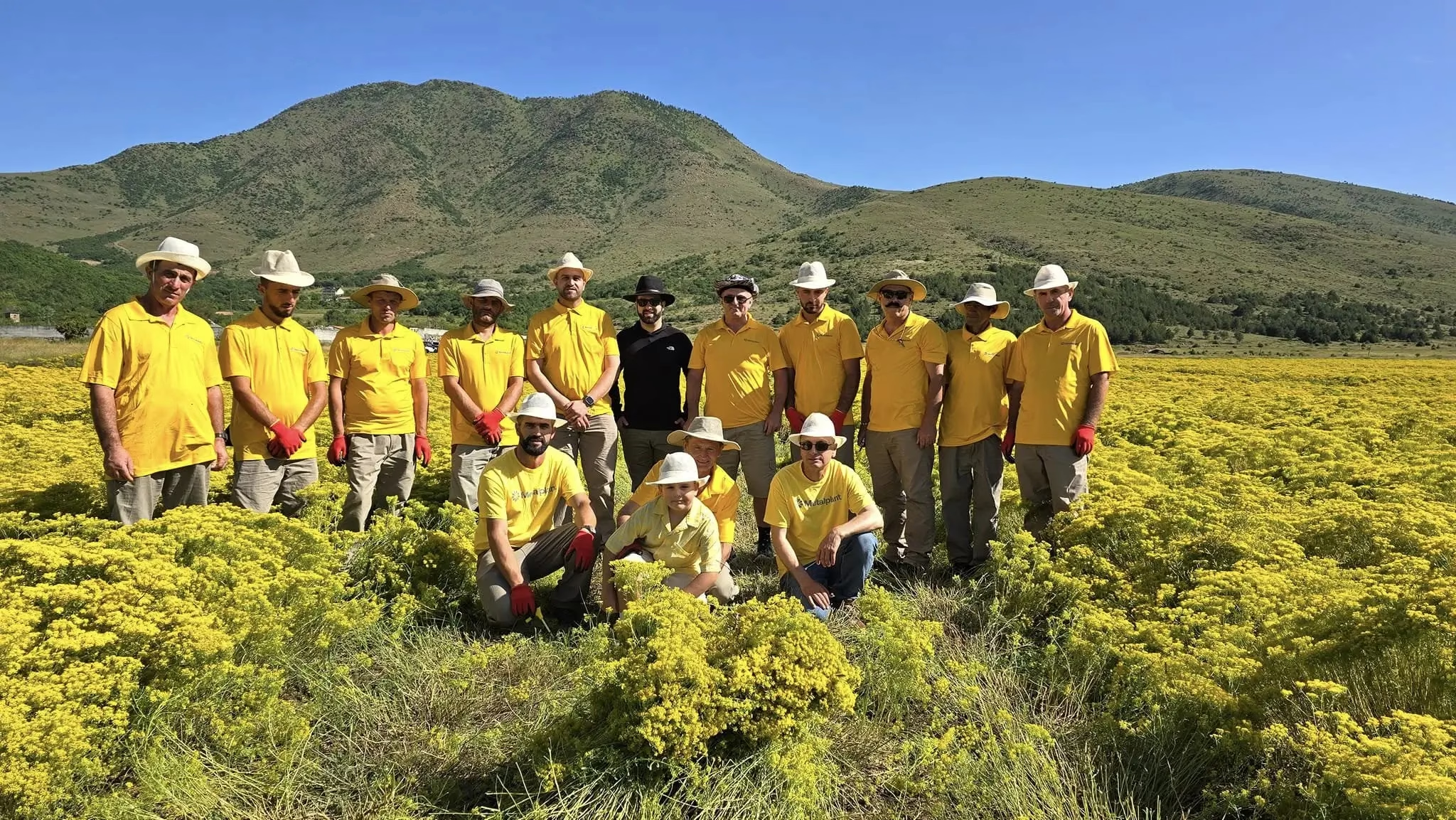
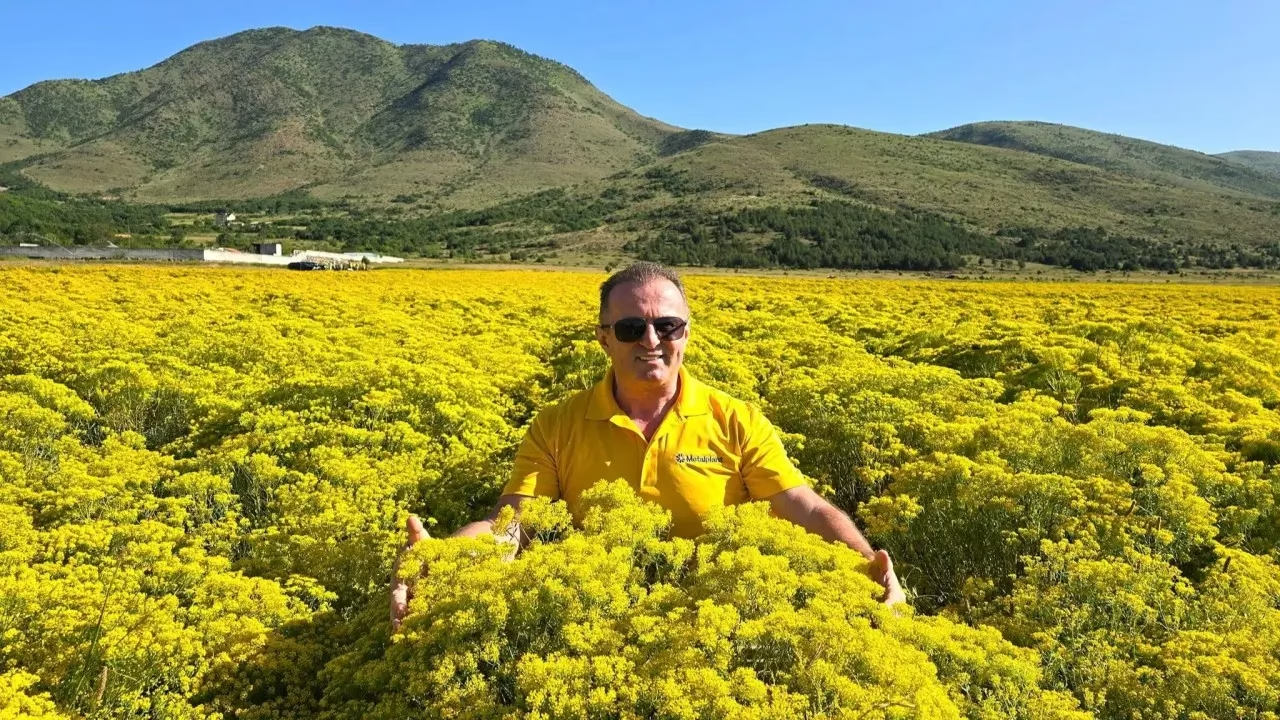
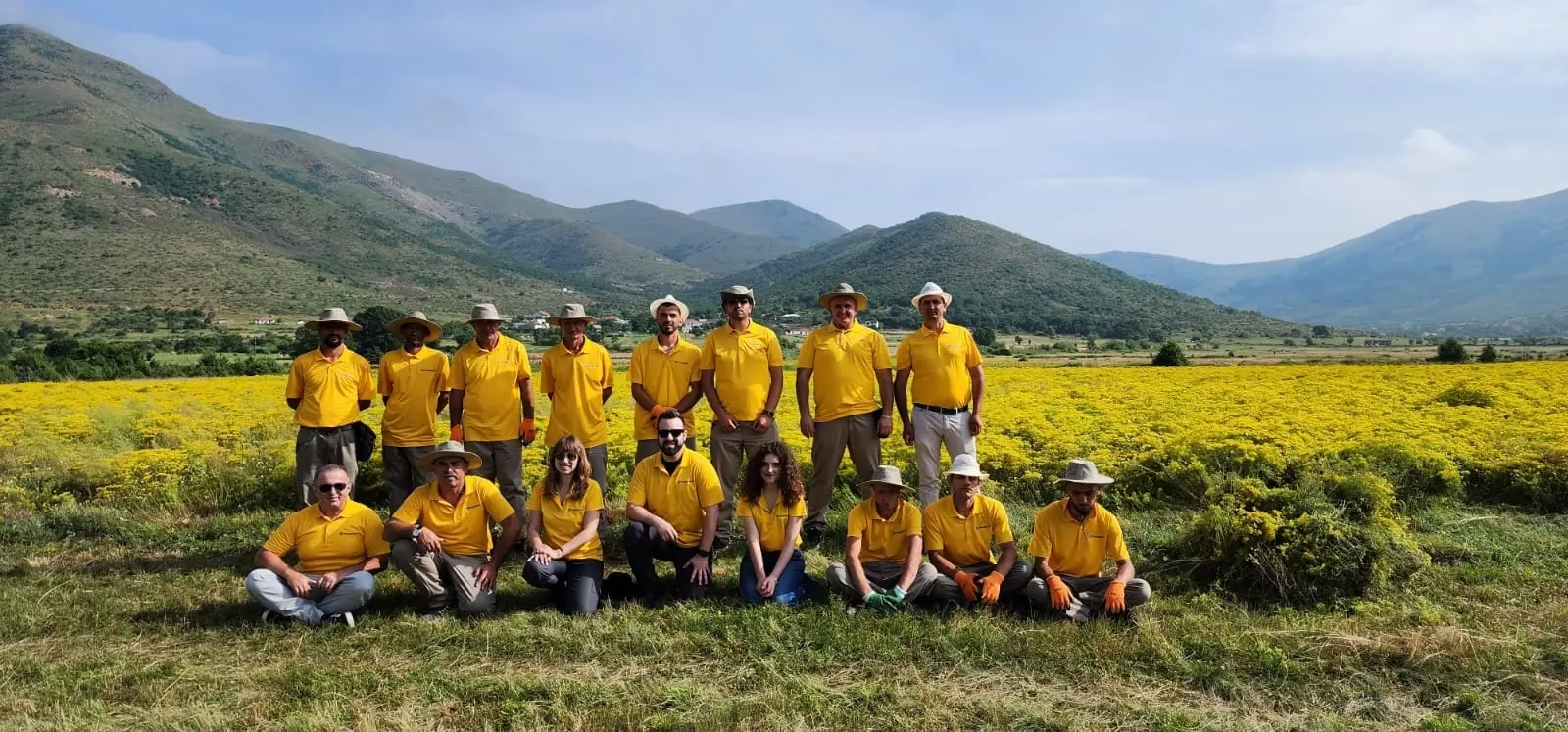
At the core of this transformation lies VLAD BIO TITAN™, a perennial, high-yield biological system that redefines what land, sunlight, and biology are capable of achieving. Producing more than 100 tons of biomass per hectare annually, it functions not as agriculture in the traditional sense, but as a living, continuously operating solar refinery—converting light, carbon dioxide, water, and nutrients into a vast and diversified portfolio of high-value outputs.
From this singular biological platform emerges an entire industrial ecosystem.
Energy is no longer extracted—it is grown. Advanced biofuels and renewable energy carriers are generated directly from biomass at scale, creating decentralized, resilient energy systems. Materials are no longer mined and processed through carbon-intensive pathways—they are cultivated. Structural composites, construction elements, and next-generation bio-based materials arise from organic carbon, engineered at the molecular level for strength, durability, and performance.
Textiles cease to be manufactured through fragmented global supply chains and instead are grown as regenerative fibers—designed for resilience, circularity, and elegance. Agriculture itself is elevated, no longer confined to food production, but expanded into a multi-dimensional engine generating energy, materials, and ecological value simultaneously.
Most remarkably, this system penetrates domains once thought exclusively dependent on fossil carbon.
Carbon fiber—essential for aerospace, mobility, and advanced engineering—emerges from biogenic sources. Graphene and nano-carbon architectures—cornerstones of the future of electronics, energy storage, and high-performance materials—are derived not from extracted hydrocarbons, but from living systems. Cement-intensive construction gives way to carbon-based building materials that are lighter, stronger, and environmentally restorative. Plastics are replaced by bio-derived alternatives designed for full lifecycle integration.
Surrounding this biological engine is an intelligence layer of unprecedented sophistication. Advanced green minerals provide the elemental backbone for catalysis, conductivity, and structural enhancement. Artificial intelligence orchestrates the entire system, optimizing growth cycles, material flows, and energy outputs in real time. Precision agriculture evolves into precision planetary management.
What emerges is not a supply chain—but a living network.
A closed-loop, self-reinforcing cycle in which nutrients flow seamlessly between soil, plants, microorganisms, water systems, and the atmosphere. Waste, as a concept, disappears. Every output becomes an input. Every process strengthens the next. Every cycle compounds value.
The implications are profound.
In this system, productivity does not degrade over time—it accelerates. Land becomes more fertile. Ecosystems become more resilient. Carbon is not merely reduced—it is actively absorbed, transformed, and reintegrated into productive use. Growth is no longer in conflict with nature—it becomes its most powerful expression.
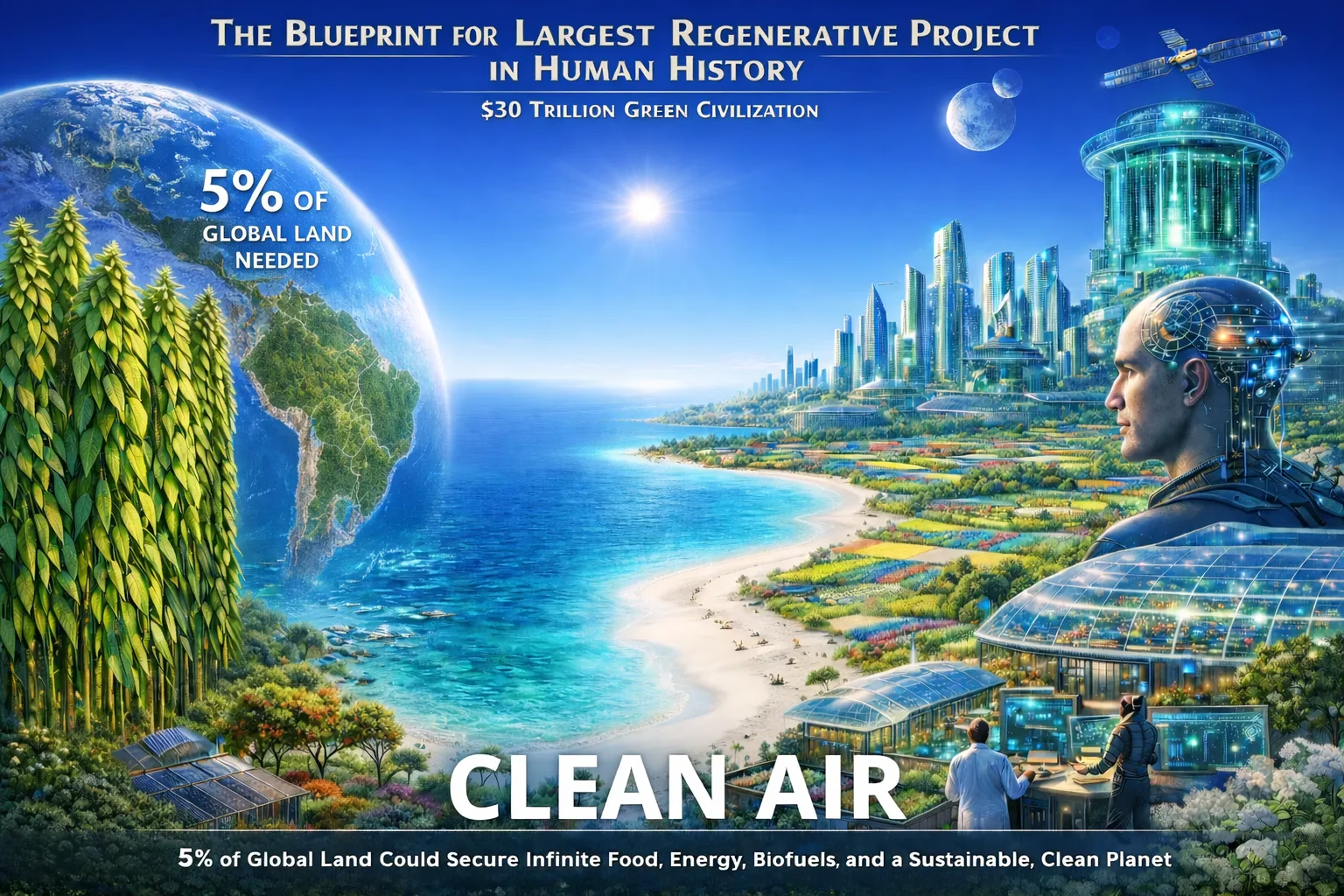
Early models suggest that a fraction—as little as five percent—of the Earth’s land could sustain a fully regenerative global economy under this architecture. Energy abundance, material security, food sovereignty, and ecological restoration converge into a single, unified system.
This is not incremental sustainability. It is exponential regeneration.
Imagine cities constructed not from extracted materials, but from cultivated carbon structures—adaptive, resilient, and integrated with natural systems. Imagine clothing that originates from regenerative biological processes, designed to return seamlessly to the Earth. Infrastructure that does not degrade ecosystems, but enhances them. Fertilization systems that increase yields while rebuilding soil health at scale.
This is a world in which the boundaries between industry, agriculture, and ecology dissolve.
A world in which the economy behaves not like a machine—but like a living organism.
For Sahit Muja, the ambition is neither modest nor incremental. It is absolute in scope: to transition humanity from a paradigm of finite consumption to one of infinite, self-reinforcing creation. To redefine value itself—not as something extracted and exhausted, but as something grown, multiplied, and perpetually renewed.
If realized, this system will not merely disrupt industries—it will render entire categories of limitation obsolete.
Energy will no longer be scarce. Materials will no longer be constrained. Growth will no longer come at the expense of the planet. Instead, civilization will enter a phase where intelligence, biology, and technology converge to unlock a new form of abundance—one rooted not in taking from the Earth, but in partnering with it.
What is emerging is more than an economic model. It is a new logic of existence.
A world where life itself becomes the primary engine of production.
A world where the Earth is not a resource—but a generator.
And for the first time in human history, a future where progress and the planet are not opposing forces—but perfectly aligned trajectories of the same living system.