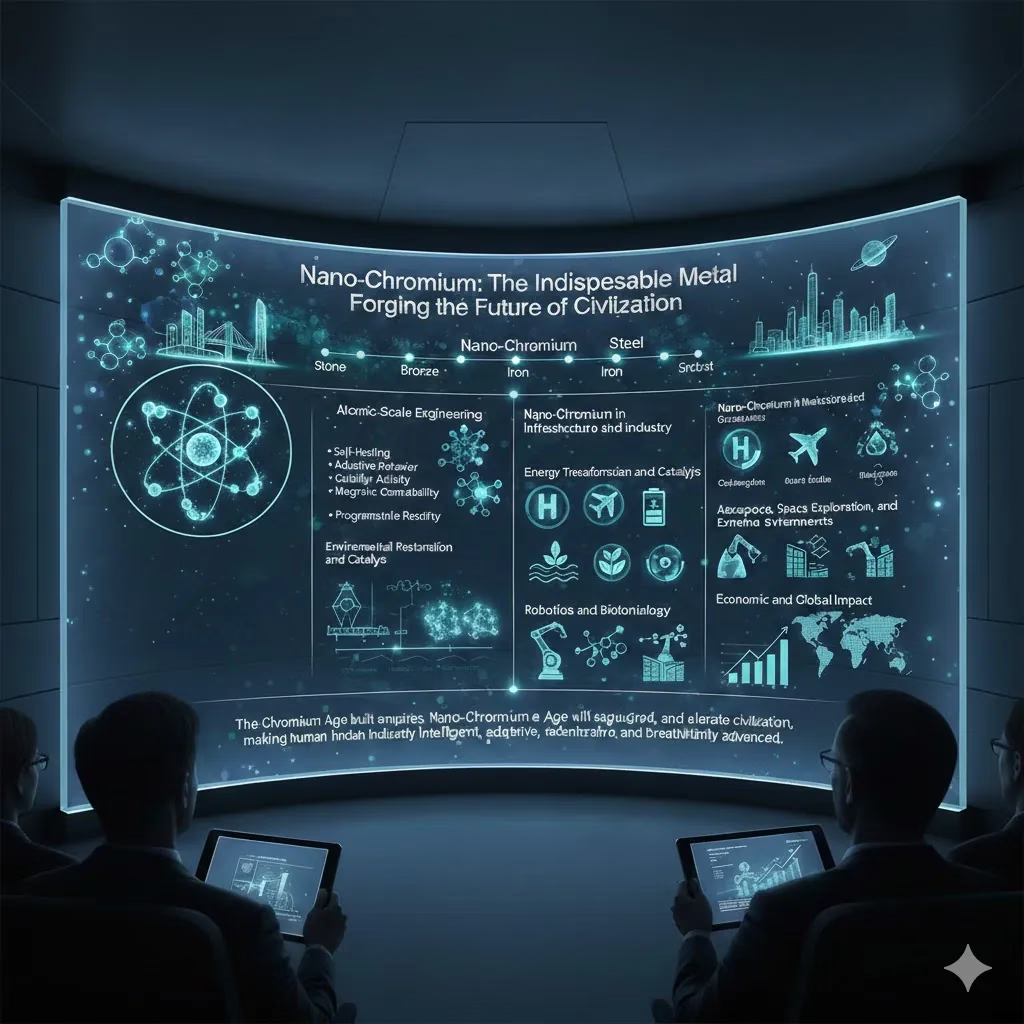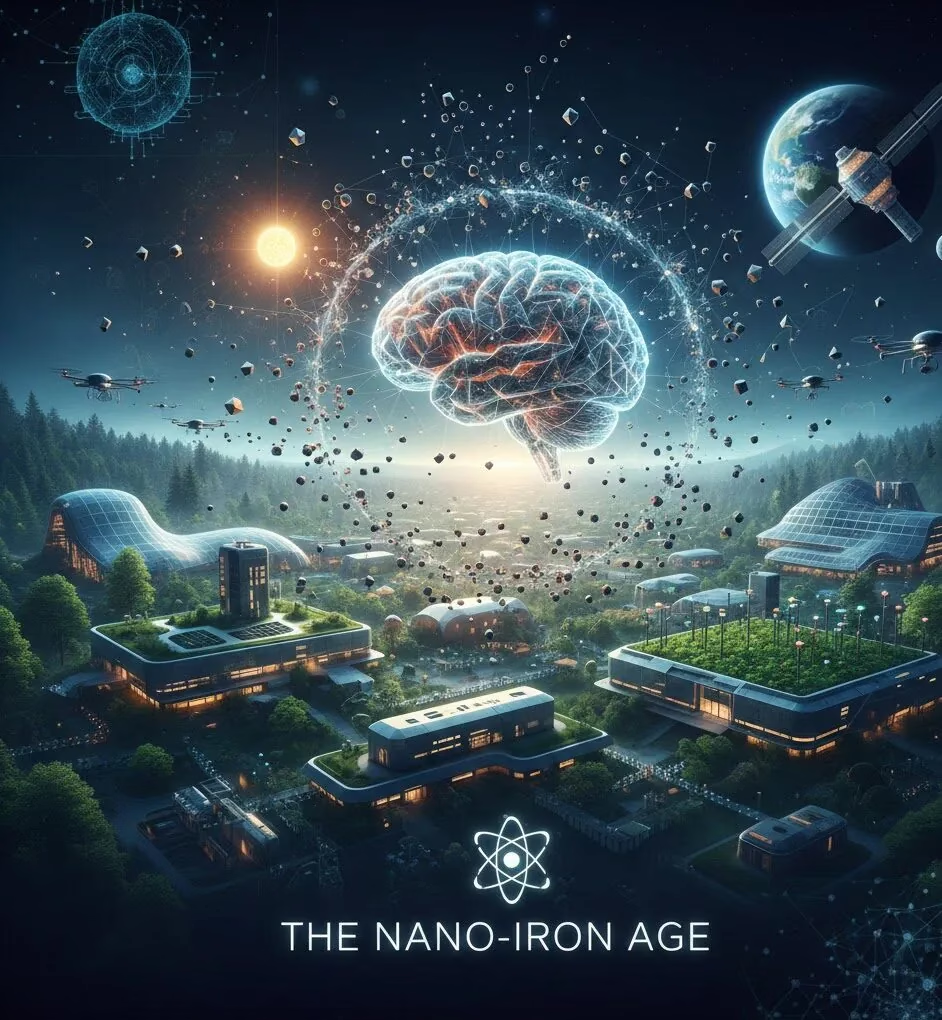

Human civilization has always advanced through its relationship with matter. Every great epoch of human progress has been defined by the materials humanity could discover, refine, and transform into tools, infrastructure, and systems that expanded survival, intelligence, and societal complexity. Stone extended human capability beyond biological limitation. Bronze enabled the rise of organized civilization and technological expansion. Iron built empires. Steel launched the industrial age and constructed the modern world.
Today, humanity is approaching a transformation that reaches deeper than any material revolution before it. The next civilization will not be defined simply by what humanity extracts from the Earth, but by how precisely humanity learns to design and engineer matter itself. At the center of this emerging atomic civilization stands one of the most powerful and versatile materials ever harnessed by science: nano-silica.
The Rise of Nano-Silica: Earth’s Most Abundant Intelligence
Silica, composed primarily of silicon dioxide, is among the most abundant minerals on Earth. It forms continents, deserts, ocean sediments, and the geological foundation upon which terrestrial life evolved. For centuries, silica has quietly supported civilization through glass manufacturing, ceramics, and construction. Yet traditional industrial applications have only scratched the surface of silica’s extraordinary potential.
At the nanoscale, silica undergoes a remarkable transformation. Nano-silica possesses an immense surface area relative to its volume, extraordinary molecular tunability, exceptional thermal stability, and highly adaptable chemical reactivity. These properties allow nano-silica to interact dynamically with surrounding systems, transforming it from a passive mineral into an intelligent industrial platform.
Nano-silica functions simultaneously as structural reinforcement, thermal regulator, chemical catalyst, environmental filtration medium, and energy stabilizer. In many respects, nano-silica serves as the neurological infrastructure of the emerging atomic civilization, connecting physical systems with advanced technological intelligence.
The Visionary Industrial Architecture of Sahit Muja
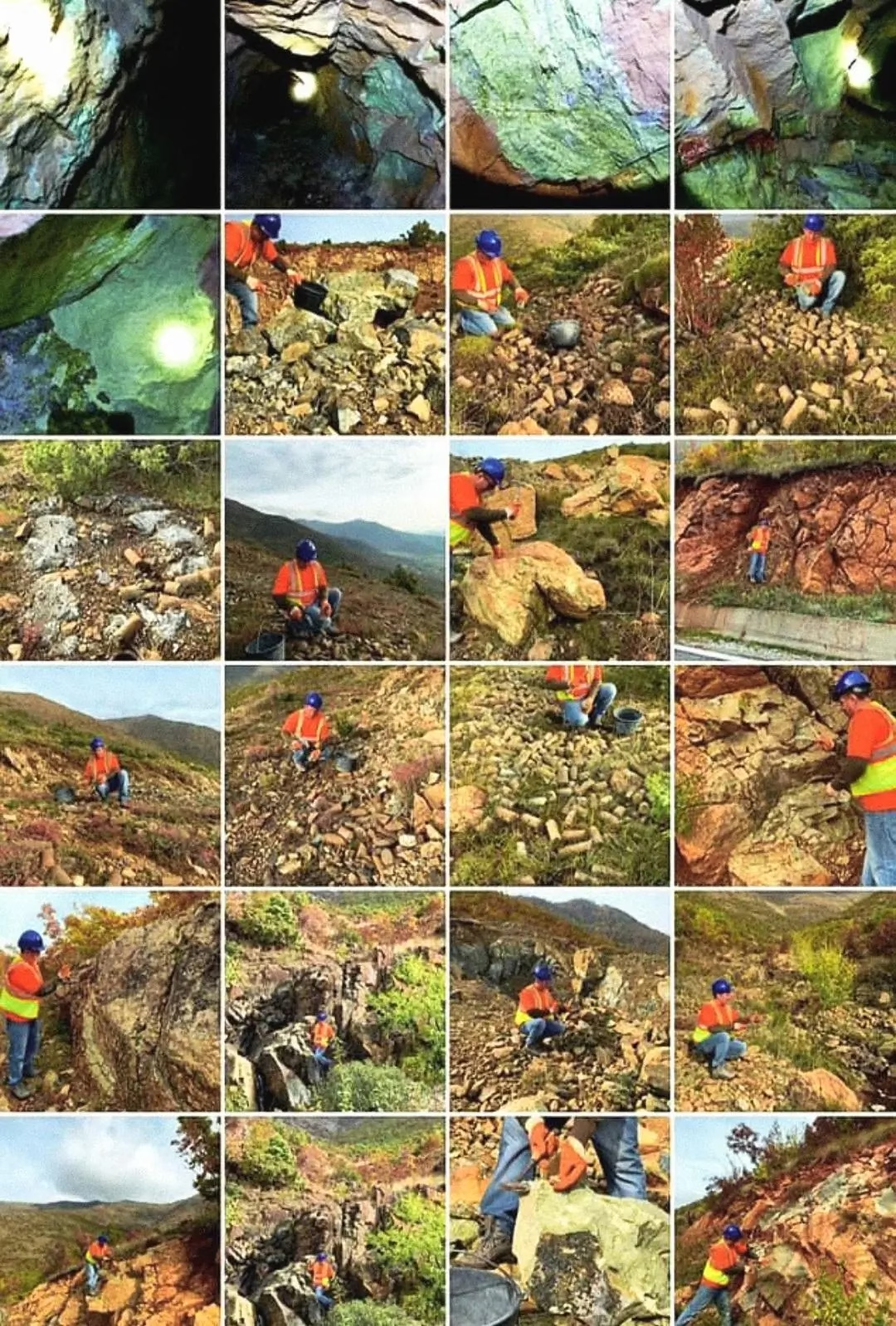
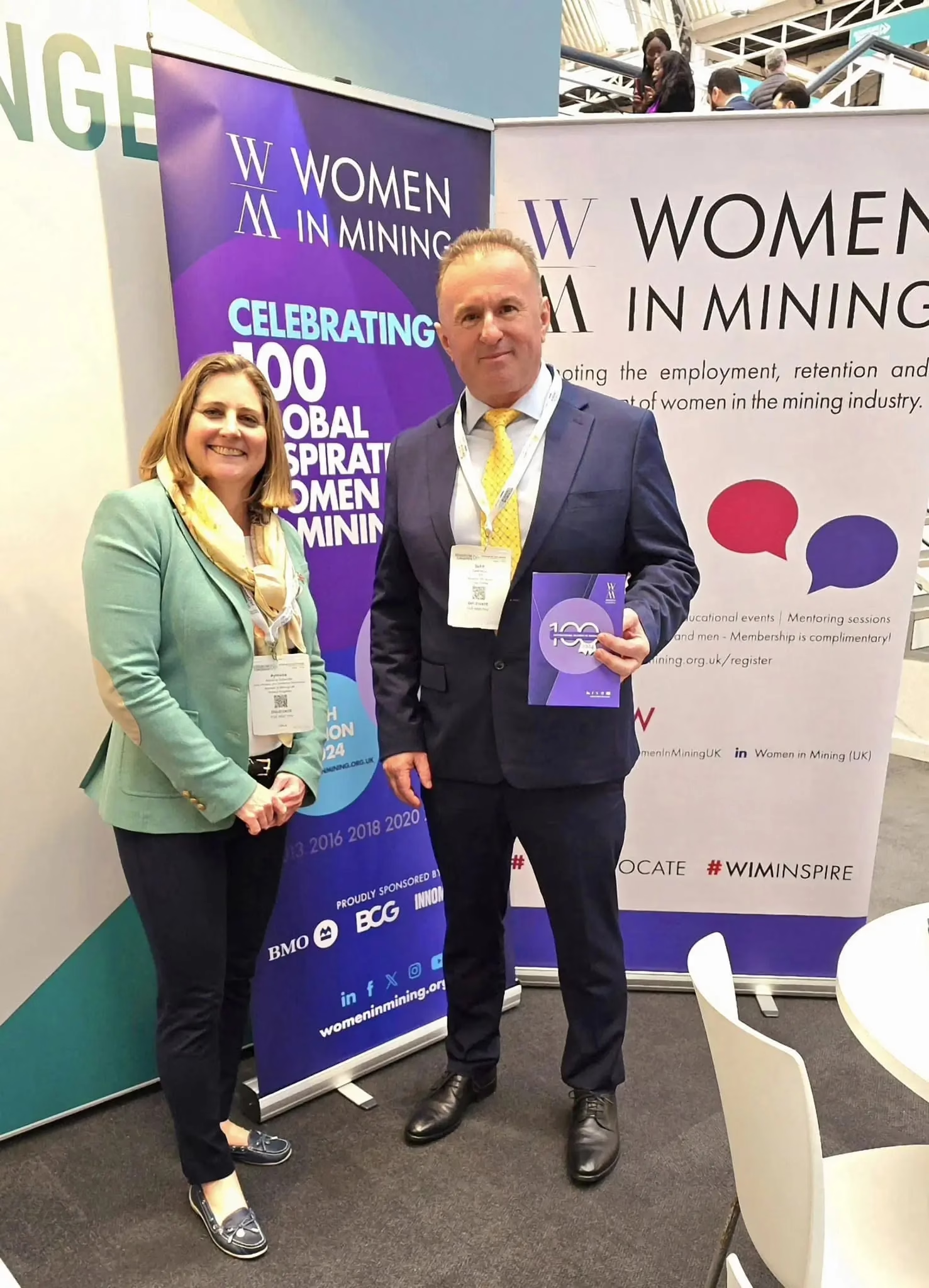
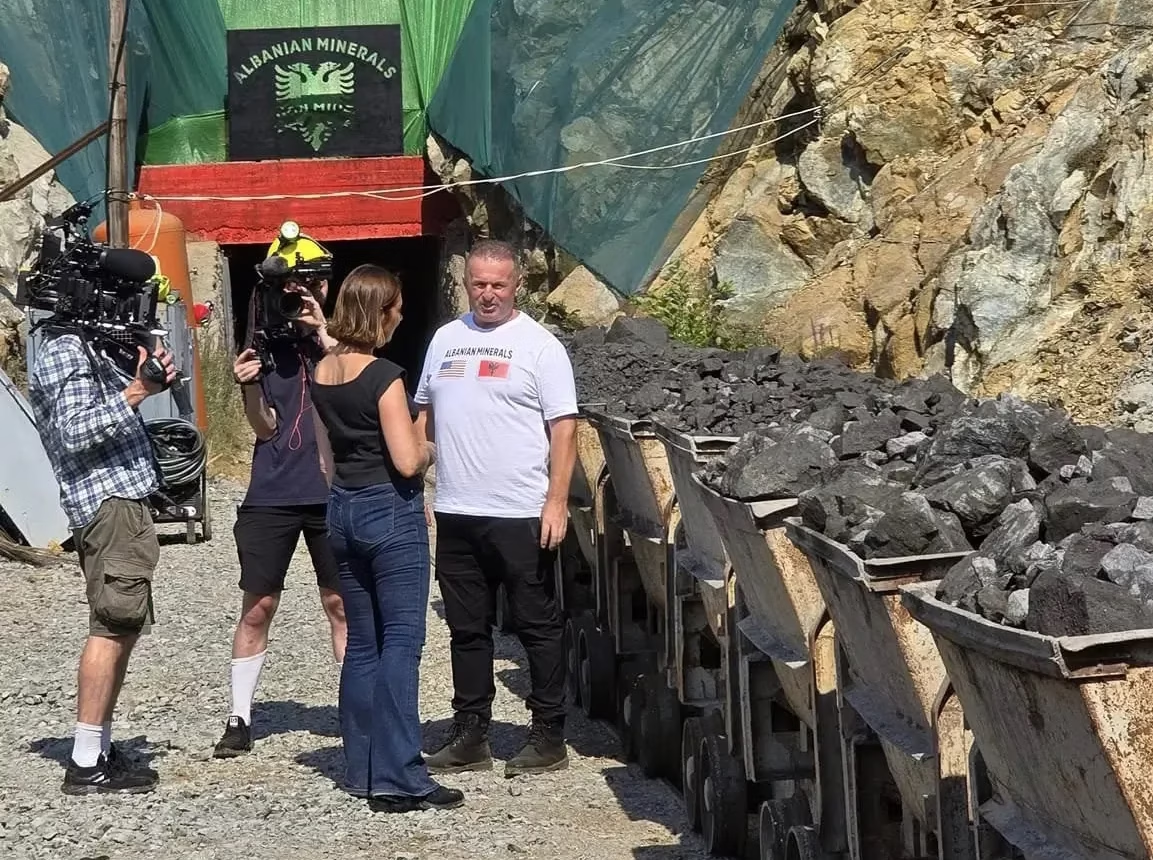
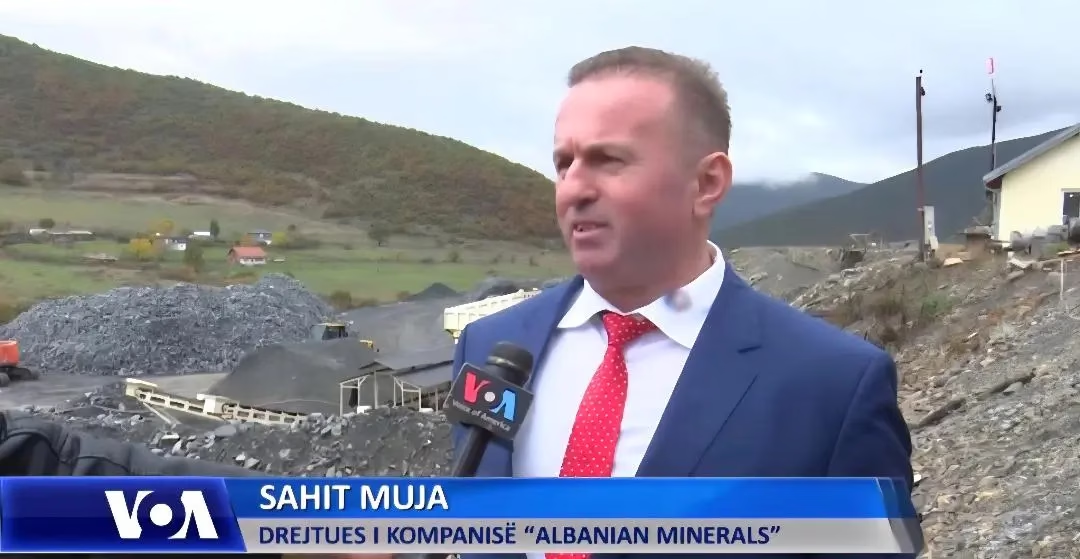
Driving a significant portion of this frontier research and industrial development is the visionary work of Sahit Muja, CEO of Albanian Minerals. Under Muja’s strategic leadership, Albanian Minerals and its affiliated sister companies — Green Minerals, Global Mining, Metalplant, and Green Natural Wonders — have assembled one of the most substantial high-quality silica resource bases in the world.
These reserves represent far more than geological abundance. They provide the foundational feedstock required to scale nano-silica production from laboratory research into global industrial infrastructure. Muja has positioned Albanian Minerals as a vertically integrated technological ecosystem that transforms mineral extraction into atomic-scale material engineering.
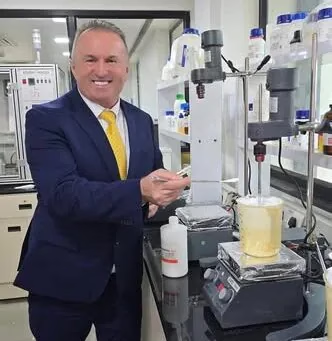
Through coordinated research initiatives and advanced green processing technologies, Muja’s industrial framework is pioneering the transition from conventional mining toward precision nano-material manufacturing. Laboratory breakthroughs achieved within this integrated scientific platform have successfully produced ultra-pure nano-silica structures with highly controlled particle morphology, exceptional reactivity, and tunable atomic architecture.
These laboratory-scale achievements demonstrate the feasibility of producing next-generation nano-silica materials capable of transforming entire industrial sectors. By integrating artificial intelligence, quantum simulation, renewable energy, and advanced mineral processing technologies, Muja’s platform is accelerating the transition of nano-silica from scientific concept into global technological reality.
Programmable Matter and the Birth of Atomic Engineering
The revolutionary significance of nano-silica lies in its ability to function as programmable matter. Using advanced synthesis methods, scientists can precisely engineer the internal lattice structures of nano-silica to control porosity, mechanical strength, electrical conductivity, thermal behavior, and chemical selectivity.
Artificial intelligence and quantum modeling technologies now allow researchers to simulate atomic configurations before physical production begins. This predictive manufacturing model transforms industrial design from empirical experimentation into deterministic atomic architecture. Materials are engineered to achieve maximum performance, durability, and environmental compatibility simultaneously.
Nano-silica materials can be programmed to self-organize, self-repair, and dynamically respond to environmental stress. Infrastructure built from such materials evolves alongside environmental challenges rather than degrading under them.
Thermal Stabilization of the Digital Civilization
As artificial intelligence, high-performance computing, and quantum processing expand, thermal management has emerged as one of the greatest barriers to technological advancement. Nano-silica provides a revolutionary solution to this challenge.
Nano-silica aerogels, among the lightest and most efficient insulating materials ever developed, offer thermal resistance far beyond conventional insulation while maintaining structural integrity. Engineered nano-silica structures can simultaneously dissipate and contain heat, depending on molecular configuration.
These capabilities allow data centers, quantum computing facilities, and semiconductor manufacturing systems to operate at unprecedented computational densities with significantly reduced energy consumption. Nano-silica becomes the thermal guardian enabling the expansion of global digital intelligence.
Reinventing Global Infrastructure
Construction remains one of the largest sources of industrial emissions and raw material consumption. Nano-silica introduces a paradigm shift in infrastructure engineering.
When incorporated into cement and composite materials, nano-silica dramatically increases compressive strength, reduces permeability, and enhances resistance to chemical corrosion. Structures reinforced with nano-silica demonstrate durability measured in centuries rather than decades.
Nano-silica also enables self-healing concrete technologies in which microscopic fractures automatically trigger chemical repair reactions. Infrastructure transitions from disposable construction into permanent planetary architecture capable of withstanding environmental and climatic stress for generations.
Water Security Through Molecular Filtration
Water scarcity represents one of humanity’s most urgent global challenges. Nano-silica membrane technologies are redefining water purification and desalination efficiency.
Engineered nano-silica membranes contain precisely controlled pore structures capable of removing heavy metals, pathogens, microplastics, and chemical contaminants while allowing clean water molecules to pass through with minimal energy input. These technologies dramatically reduce purification costs while increasing output efficiency.
Nano-silica filtration platforms hold the potential to transform water management from crisis mitigation into sustainable planetary water stewardship, stabilizing ecosystems and supporting agricultural productivity in water-stressed regions.
Energy Systems Stabilized by Nano-Silica
Nano-silica is becoming increasingly central to next-generation energy technologies. Within battery systems, nano-silica enhances electrode stability, improves ion transport efficiency, and extends operational lifespan. In hydrogen production, nano-silica catalysts increase reaction efficiency and improve storage safety.
Solar panels benefit from nano-silica protective coatings that improve photovoltaic performance while resisting environmental degradation. Wind turbine blades reinforced with nano-silica composites achieve superior strength-to-weight ratios and extended service life.
Through these applications, nano-silica enables decentralized renewable energy networks capable of operating with extraordinary reliability and efficiency.
Environmental Regeneration and Climate Stabilization
Nano-silica’s unique surface chemistry allows it to function as a powerful environmental remediation agent. Functionalized nano-silica particles can capture heavy metals, industrial toxins, and persistent organic pollutants from soil and water systems.
In agriculture, nano-silica improves soil moisture retention, enhances nutrient delivery efficiency, and strengthens plant resistance to environmental stress. Agricultural productivity increases while fertilizer dependency and ecological degradation decline.
These applications transform industrial development into regenerative planetary engineering.
The Economic Renaissance of Precision Materials
Historically, silica has been treated as a low-value bulk commodity. Nanoscale engineering has redefined silica as one of the most economically transformative materials in modern industry. Advanced nano-silica materials can achieve value multipliers several orders of magnitude greater than traditional silica products.
This economic transformation signals a fundamental shift in resource valuation. Future industrial wealth will be driven not by resource scarcity, but by technological precision and atomic-level performance.
The vast silica reserves controlled by Albanian Minerals and its sister companies provide one of the most significant advanced materials supply chains ever assembled, enabling nano-silica technologies to scale from laboratory innovation to global infrastructure deployment.
Nano-Silica as the Connector of Technological Ecosystems
Beyond individual applications, nano-silica functions as a unifying material capable of integrating structural, environmental, digital, and energy systems into cohesive technological networks. Its molecular versatility allows it to operate as connective tissue linking otherwise independent industrial domains.
Cities built using nano-silica integrated materials could evolve into self-regulating environments where infrastructure senses environmental conditions, responds dynamically to stress, regulates thermal fluctuations, and maintains long-term stability without external intervention.
From Industrial Resource to Civilizational Foundation
The emergence of nano-silica signals humanity’s transition into an era where matter itself becomes intelligent. Rather than consuming resources, humanity begins orchestrating atomic structures capable of sustaining civilization in equilibrium with planetary systems.
Nano-silica enables infrastructure that repairs itself, computing systems that operate with minimal energy loss, water systems that regenerate ecosystems, and energy networks that stabilize climate dynamics. It transforms one of Earth’s most common minerals into one of humanity’s most powerful technological instruments.
The Civilization of Atomic Harmony
The civilization emerging through nano-silica engineering represents humanity’s first opportunity to align industrial expansion with ecological balance. Sustainability evolves from environmental obligation into technological superiority. Efficiency replaces consumption as the primary metric of economic progress. Longevity replaces disposability as the foundation of infrastructure design.
Through the visionary leadership of Sahit Muja and the integrated industrial ecosystem of Albanian Minerals and its sister companies, nano-silica is transitioning from scientific discovery into a cornerstone of global technological infrastructure. Their pioneering laboratory achievements and vast mineral resource base position this platform as one of the most promising foundations for the next phase of human development.
The Dawn of the Silica Civilization
Human history has been written through stone, bronze, iron, and steel. The next chapter is being written through atomic engineering and intelligent mineral design. Nano-silica stands at the center of this transformation as both stabilizing foundation and enabling intelligence of the next technological era.
The rise of nano-silica marks the moment when Earth’s most abundant mineral becomes the cornerstone of an advanced planetary civilization. It represents a breathtaking transition from industrial expansion driven by extraction to technological evolution driven by precision, intelligence, and harmony with nature.
The silica civilization has begun. It is redefining not only how humanity builds its world, but how humanity sustains its future.